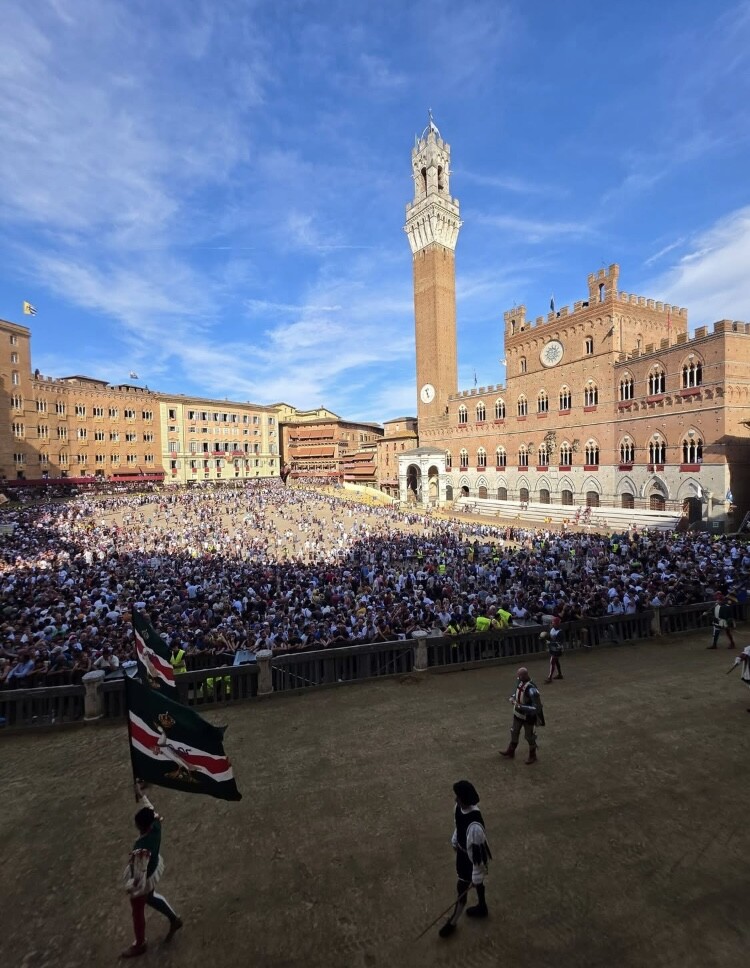
How Many Days Should You Spend in Siena for the Palio?
For many first-time visitors, two nights in Siena are a practical starting point: arrive the day before the race, keep race day free and leave the following day. Three nights give you an additional day to settle in and explore without fitting every activity around the event.
These are planning recommendations, not official requirements. The right length of stay depends on your travel connections, how much of Siena you want to see and whether you hope to follow more of the preparations.
Plan around the event, not only the race
The two traditional Palio dates are 2 July and 16 August. The associated programme extends across four days, normally 29 June–2 July and 13–16 August, with preparations and trial runs before race day. Visit Tuscany’s Palio guide provides the wider event context.
This does not mean that every activity is automatically open to visitors, or that a particular trial or ceremony can be guaranteed as part of your stay. Check the current programme and access arrangements before building timed plans around it.
For an introduction to the tradition itself, read our Palio di Siena overview. Here, the focus is how to organise your time.
Is a race-day visit enough?
A day visit can work for someone already staying nearby who has a confirmed arrival and return plan. It leaves less flexibility, however, if traffic, access instructions or the event’s timing affect your schedule.
The race itself is short, but your visit is not simply a short appointment in the middle of an ordinary sightseeing day. Allow time to arrive, find your meeting point and follow the instructions for your arrangements.
If the Palio is the main reason for travelling to Italy, consider whether a same-day arrival gives you the margin you want. Do not make an immediate post-event train, flight or dinner reservation essential to the success of the trip.
A two-night stay: keep the plan simple
Two nights work best when you want to attend the Palio and have some time in Siena without trying to cover the full programme.
Day one: arrive and get oriented
Arrive the day before the race. Check in, establish your walking route from the accommodation and confirm any meeting instructions for the following day.
Keep the first afternoon manageable. A walk through the city and an unhurried meal are more useful than a succession of reservations after a long journey. Ask your accommodation about luggage, vehicle access and the practicalities of returning after the event.
Day two: leave room around the Palio
Keep race day focused on Siena. Avoid an out-of-town excursion that depends on returning at a precise hour.
Build the day around the current instructions for your own arrangements, not a general timetable found online. Leave time for a meal, a break and getting to the agreed meeting point.
Day three: depart without a rushed early start
Where possible, choose an onward journey that leaves some breathing room in the morning. This is a recommendation for a more comfortable stay, not an assurance that one additional night will cover every possible change to the event schedule.
A three-night stay: add time before race day
Three nights allow you to arrive two days before the race. That extra day can be used for Siena’s architecture, a booked cultural visit or simply a slower introduction to the city.
If attending a trial run is important to you, check the current schedule and the relevant access arrangements before committing the day. Do not assume that your accommodation or race-day arrangements include admission to a separate activity.
Keep the extra day flexible enough to enjoy Siena rather than using it to add another long-distance excursion. The advantage of the longer stay is less rushing, not a more crowded list of appointments.
Example arrival and departure dates
| Length of stay | For the 2 July Palio | For the 16 August Palio |
|---|---|---|
| Two nights | Arrive 1 July; depart 3 July | Arrive 15 August; depart 17 August |
| Three nights | Arrive 30 June; depart 3 July | Arrive 14 August; depart 17 August |
These examples assume the race takes place on its scheduled date. They are not guarantees against postponement.
If you want to follow the programme from its first morning, two or three nights are not enough to cover everything. Plan around the published start of the programme and consider arriving the previous evening.
Staying in Siena or travelling in?
Choose accommodation according to the whole itinerary, not only the distance shown on a map. A central property may offer a convenient walk, while accommodation outside the centre requires a clear plan for reaching the relevant meeting point and getting back.
Before booking, ask about check-in, luggage storage, vehicle access and any walking involved. If you are staying elsewhere in Tuscany, confirm the return journey as carefully as the outward one.
Where you sleep and where you watch the race are separate decisions. For the latter, use our guide to Palio viewing options, rather than assuming that a hotel location determines your race-day arrangements.
What to confirm before booking the rest of your trip
Check the current programme, accommodation conditions, transport arrangements and the implications of any event change. Book separate activities only when you understand what time is realistically available.
Do not assume that staying longer includes access to a Contrada’s private activities, museums or dinners. Any visit or hospitality arrangement needs its own confirmation, and local instructions should take priority over a suggested itinerary.
For an art-focused visit between Palio commitments, read about Siena Cathedral’s marble floor and its official unveiling dates. The calendar changes by year, so confirm cathedral access separately rather than assuming it is part of your Palio arrangements.
Turn your dates into a workable plan
A good Palio stay gives the event room without making the rest of your Tuscany trip depend on a minute-by-minute schedule.
When you send a Palio enquiry to Italy Spotlight, include your intended arrival and departure dates, where you will stay and the number of guests. That context helps the team discuss the relevant Palio arrangements. Availability and final conditions must be confirmed before purchase.